
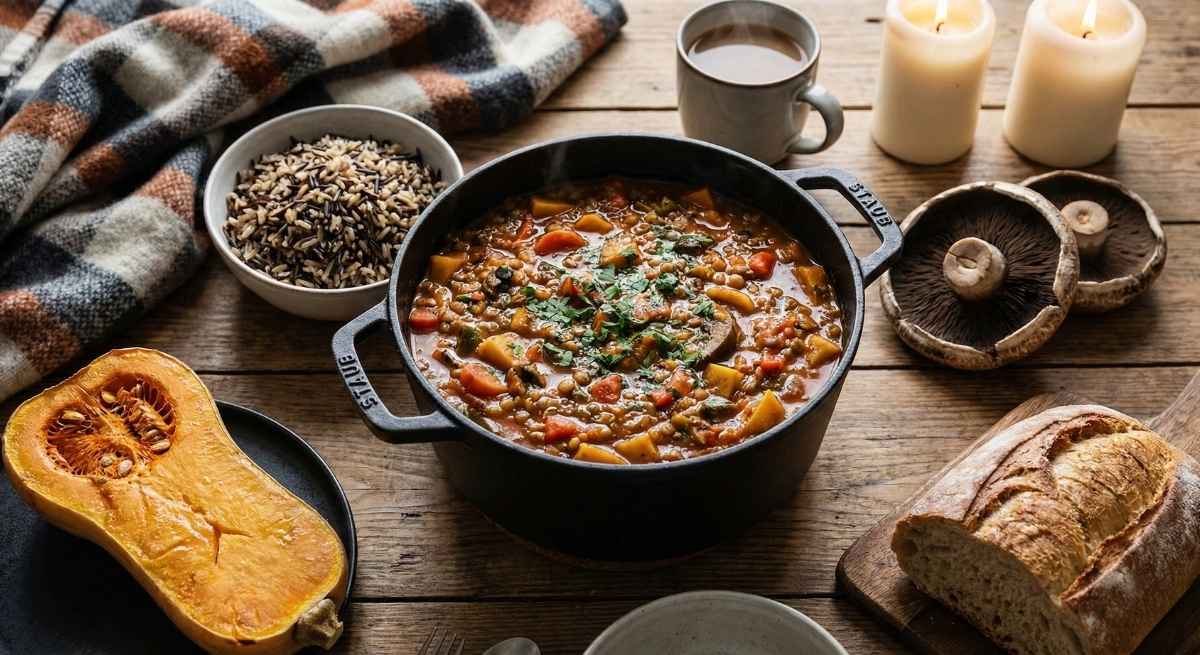
Let’s be honest: winter calls for a different kind of cooking. When the sun sets at 4:30 PM and the wind is howling outside, a cold salad just doesn’t cut it. You want warmth. You want comfort. You want something that sticks to your ribs.
If you are looking for winter dinner ideas vegetarian style, you might be worried that leaving out the meat means leaving out the “hearty” factor. That is a myth we are about to bust.
This guide isn’t just a random list of recipes. It is a strategist’s approach to winter eating. We are going to look at how to build meals that satisfy that deep winter hunger using seasonal produce, protein-packed pantry staples, and “meaty” textures—without a single ounce of beef or chicken.
The “Secret Sauce” of Satisfying Winter Vegetarian Meals
Before we get into the specific ideas, you need to know why some vegetarian meals leave you hungry an hour later and others keep you full all night. In winter, your body craves density and heat.
To make any vegetarian dinner “winter-proof,” make sure it has these three things:
- Umami Depth: Use ingredients like mushrooms, tomato paste, soy sauce, or parmesan (or nutritional yeast) to mimic the savory depth of meat.
- Root Vegetables: Winter is the season for sweet potatoes, carrots, parsnips, and squash. They are naturally sweet and filling.
- Fat & Creaminess: Don’t fear healthy fats. Coconut milk, heavy cream, tahini, or olive oil are essential for that “comfort food” mouthfeel.
Read More: How Many Calories in 85/15 Ground Beef? (Cooked vs. Raw Guide)
Read More: The Best Brenda Gantt Cabbage Casserole Recipe: Southern Comfort in a Bowl
Read More: Best Low Carb High Protein Meals: The Practical Guide to Fueling Your Body
Read More: Low Carb Soups for Weight Loss Vegetarian: 3 Creamy & Filling Recipes
Read More: Delicious High Protein Low-Carb Dinner Recipes That Actually Taste Good
1. The “I’m Exhausted” Weeknight Wins (Under 30 Minutes)
These are for those pitch-black Tuesday evenings when you just got home from work and have zero energy.
The “Dump-and-Bake” Gnocchi
This is a lifesaver. You don’t even need to boil the water first.
- The Idea: Toss a package of shelf-stable potato gnocchi onto a sheet pan with cherry tomatoes, bell peppers, and red onion. Drizzle heavily with olive oil, salt, and Italian herbs.
- The Winter Twist: Add chunks of precooked vegetarian sausage or chickpeas for protein.
- Cook: Roast at 400°F (200°C) for 20 minutes until the tomatoes burst and create a sauce. Top with mozzarella balls and broil for 2 minutes.
Spicy Peanut Noodles with Frozen Veggies
A warm bowl of noodles beats takeout every time.
- The Idea: Boil ramen noodles (ditch the flavor packet). In a bowl, mix peanut butter, soy sauce, a splash of hot water, and Sriracha.
- The Winter Twist: Throw a cup of frozen mixed vegetables (peas, carrots, corn) into the boiling noodle water. Drain everything together and toss in the sauce.
- Why it works: The fat in the peanut butter signals “satisfaction” to your brain immediately.
2. The “Sunday Slow-Cooker” Comforts
These meals are for when you want your house to smell amazing all day. They are heavy, rich, and perfect for meal prepping.
Classic Vegetarian Shepherd’s Pie
This is widely considered the king of winter comfort foods.
- The Base: Instead of ground beef, use a mix of brown lentils and finely chopped walnuts. This combination creates a texture indistinguishable from meat. Sauté them with onions, carrots, and peas in a rich vegetable broth thickened with a little flour.
- The Topping: A thick layer of buttery mashed potatoes (or sweet potatoes for extra Vitamin A).
- Pro Tip: Drag a fork across the top of the potatoes before baking. Those little ridges get crispy and brown in the oven.
Creamy Wild Rice and Mushroom Soup
Forget the watery vegetable soups. You want something you can stand a spoon up in.
- The Base: Sauté onions, celery, and lots of garlic. Add roughly chopped cremini or portobello mushrooms.
- The Liquid: Vegetable broth and a can of full-fat coconut milk or heavy cream.
- The Star: Add uncooked wild rice directly to the pot and simmer until tender (about 45 minutes). The starch from the rice thickens the soup naturally.
3. High-Protein Winter Power Bowls
Vegetarians often worry about protein. In winter, you can get it easily from beans and grains.
- Roasted Root Veggie Bowl: Roast cubes of butternut squash and beets. Serve over warm quinoa. Top with a fried egg or crispy tofu and a lemon-tahini dressing.
- The “Chili” Baked Potato: Bake large russet potatoes. Split them open and stuff them with leftover vegetarian chili and cheddar cheese. It’s cheap, filling, and incredibly warming.
FAQ: Winter Dinner Ideas Vegetarian
What are some good winter vegetarian meals for picky eaters?
Pasta bakes are the safest bet. A “Baked Ziti” with marinara sauce, ricotta, and spinach usually pleases everyone because the veggies are hidden by the cheese. Another great option is “Breakfast for Dinner”—think fluffy pancakes or potato hash browns with eggs.
What is the most popular vegetarian Christmas dinner?
In the US and UK, the Vegetarian Wellington is the top choice. Instead of beef, the puff pastry is stuffed with a savory mixture of mushrooms, chestnuts, spinach, and squash. It looks spectacular when sliced. Another popular option is a Nut Roast, which is like a savory loaf made from nuts, grains, and herbs, served with gravy.
What are 10 good dinner foods for vegetarians to stock in winter?
Canned Lentils: Instant protein for stews.
Chickpeas: Roast them for a crunch or add to curries.
Sweet Potatoes: Keep for weeks, highly versatile.
Frozen Spinach: Adds nutrition to pastas without prep.
Vegetable Broth Paste: Better flavor than the liquid boxes.
Coconut Milk: For creamy curries and soups.
Dry Pasta: The ultimate comfort base.
Quinoa: Cooks fast, high protein.
Winter Squash (Butternut/Acorn): Great for roasting.
Nutritional Yeast: Adds cheesy flavor to dairy-free sauces.
Actionable Tip: The “Texture Swap” Rule
If you are adapting a meat recipe for winter, don’t just remove the meat—swap it.
- Replace Chicken with Chickpeas or Cauliflower.
- Replace Ground Beef with Lentils or Walnuts.
- Replace Steak with Portobello Mushrooms or Eggplant.
Winter is the best time to be a vegetarian. The produce is hardy, the flavors are deep, and the meals are naturally comforting. Grab your biggest pot, turn on the oven, and get cozy.